
Introduction
Diamonds have fascinated humanity for centuries. Whether you’re buying an engagement ring, investing in gemstones, or simply curious about what makes diamonds so valuable, this Diamonds 101 Beginner’s Guide will walk you through everything you need to know.
We’ll cover the 4Cs (Cut, Clarity, Color, Carat), diamond types, buying tips, and essential care practices — all in simple, easy-to-follow language.
🔹 What Is a Diamond?
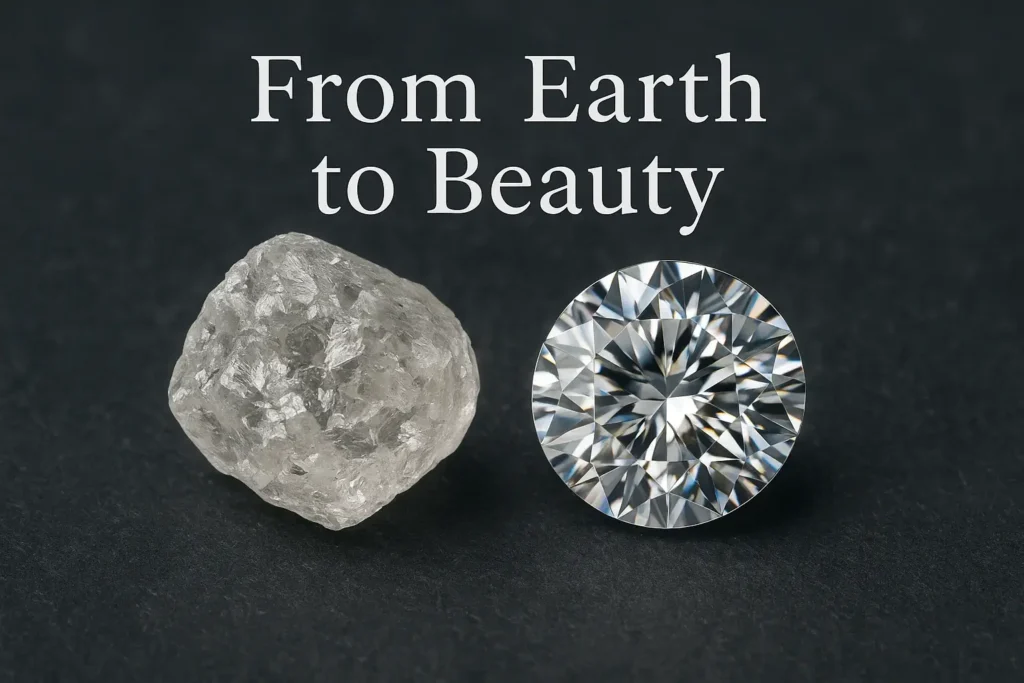
A diamond is a naturally occurring gemstone made of carbon, formed under extreme heat and pressure deep within the Earth. Known as the hardest natural substance, diamonds symbolize strength, eternity, and love.
🔹 The 4Cs of Diamonds (The Golden Standard)
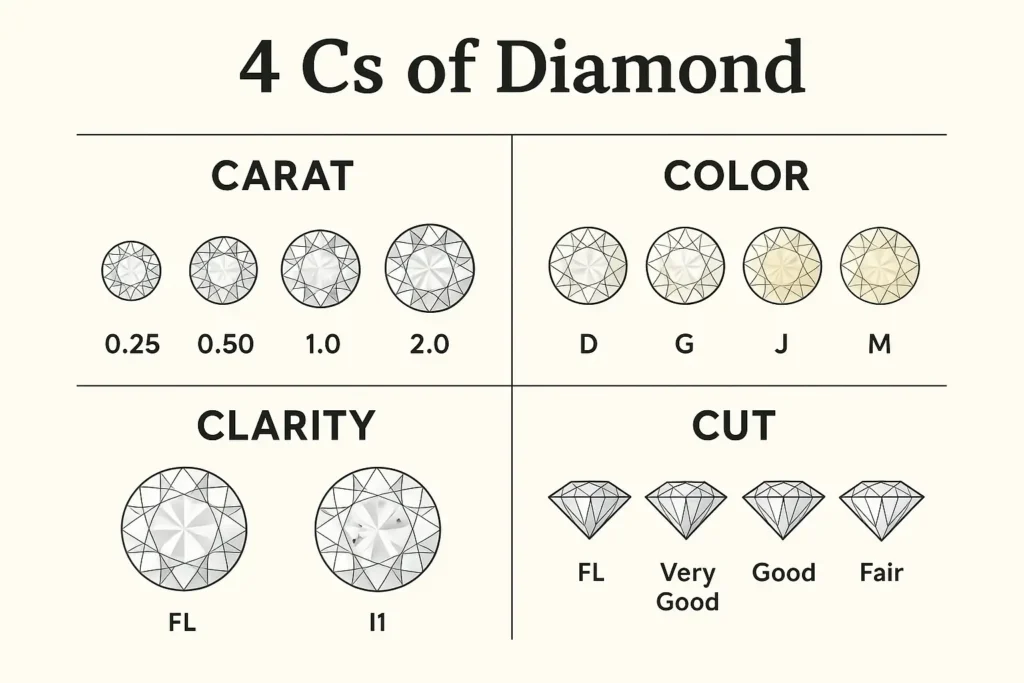
The 4Cs — Cut, Clarity, Color, and Carat — are the global standard for assessing diamond quality. Developed by the Gemological Institute of America (GIA), these four factors determine a diamond’s beauty and value.
1. Cut (The Sparkle Factor)
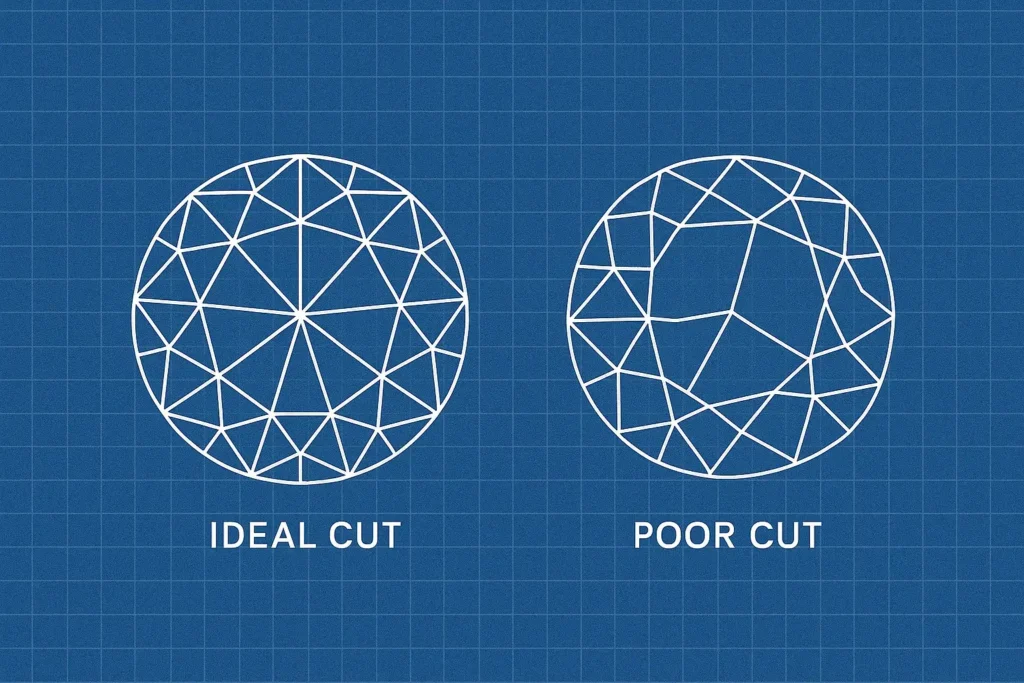
The cut of a diamond is not its shape (round, oval, etc.), but rather how well the stone’s facets interact with light.
- A well-cut diamond reflects light beautifully, creating brilliance (white light return), fire (colored light dispersion), and scintillation (sparkle when the diamond moves).
- A poorly cut diamond, even if flawless in clarity and color, will look dull.
Cut Grades (GIA):
- Excellent → Maximum sparkle, perfectly proportioned.
- Very Good → Almost as brilliant as Excellent but slightly less expensive.
- Good → Decent sparkle but noticeable light leakage.
- Fair/Poor → Dull, lacks brilliance, not recommended.
Pro Tip: Always prioritize Cut over Carat — a smaller diamond with an Excellent cut often looks more stunning than a bigger poorly cut stone.
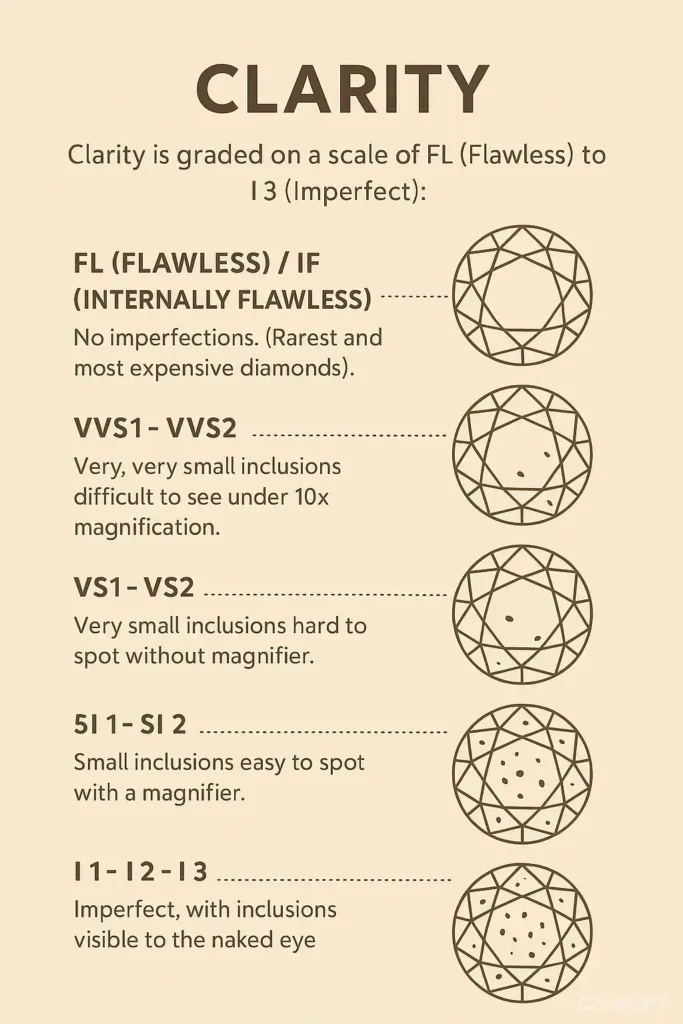
2. Clarity (The Purity of a Diamond)
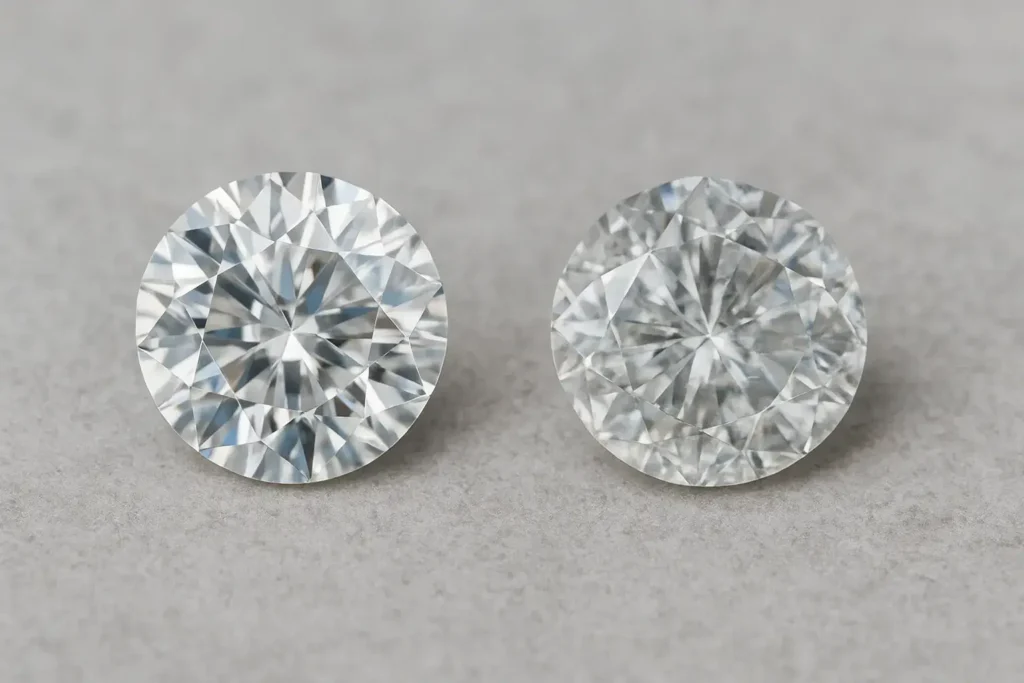
Clarity refers to the presence of inclusions (internal flaws like crystals or clouds) and blemishes (surface marks like scratches).
- Most inclusions are invisible to the naked eye, but they affect grading and price.
Clarity Grades (GIA):
- Flawless (FL): No inclusions or blemishes under 10x magnification.
- Internally Flawless (IF): No inclusions, only tiny surface blemishes.
- VVS1–VVS2 (Very, Very Slightly Included): Minute inclusions, extremely hard to detect.
- VS1–VS2 (Very Slightly Included): Minor inclusions visible under magnification, not noticeable to the naked eye.
- SI1–SI2 (Slightly Included): Noticeable inclusions under magnification, sometimes visible without magnification.
- I1–I3 (Included): Obvious inclusions, reduced brilliance, fragile durability.
Pro Tip: For most buyers, VS1–SI1 clarity offers the best balance of beauty and value.
3. Color (The Diamond’s Tint)
Diamonds are graded based on how colorless they appear. Even a slight yellow or brown tint can impact a diamond’s value.
Color Grades (GIA D–Z Scale):
- D–F (Colorless): Extremely rare, icy-white appearance.
- G–J (Near Colorless): Very little color visible; excellent value for engagement rings.
- K–M (Faint Color): Noticeable warmth; works well in yellow-gold settings.
- N–Z (Light Color): Strong yellow or brown tint, less desirable.
Pro Tip: Choose G–H color for the best value — they look nearly colorless but are more affordable than D–F.
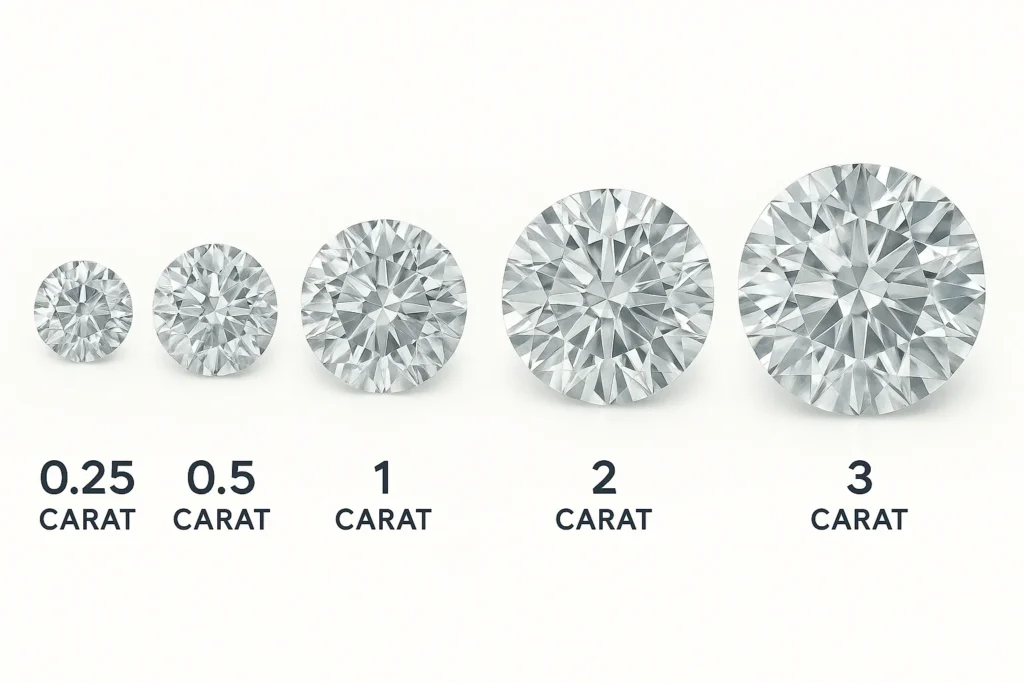
4. Carat (The Diamond’s Weight)
Carat measures a diamond’s weight, not size.
- 1 Carat = 200 milligrams.
- Larger diamonds are rarer, so carat weight significantly affects price.
But bigger isn’t always better — a 1-carat diamond with poor cut will look dull next to a 0.8-carat Excellent cut stone.
🔹 Diamond Shapes & Styles
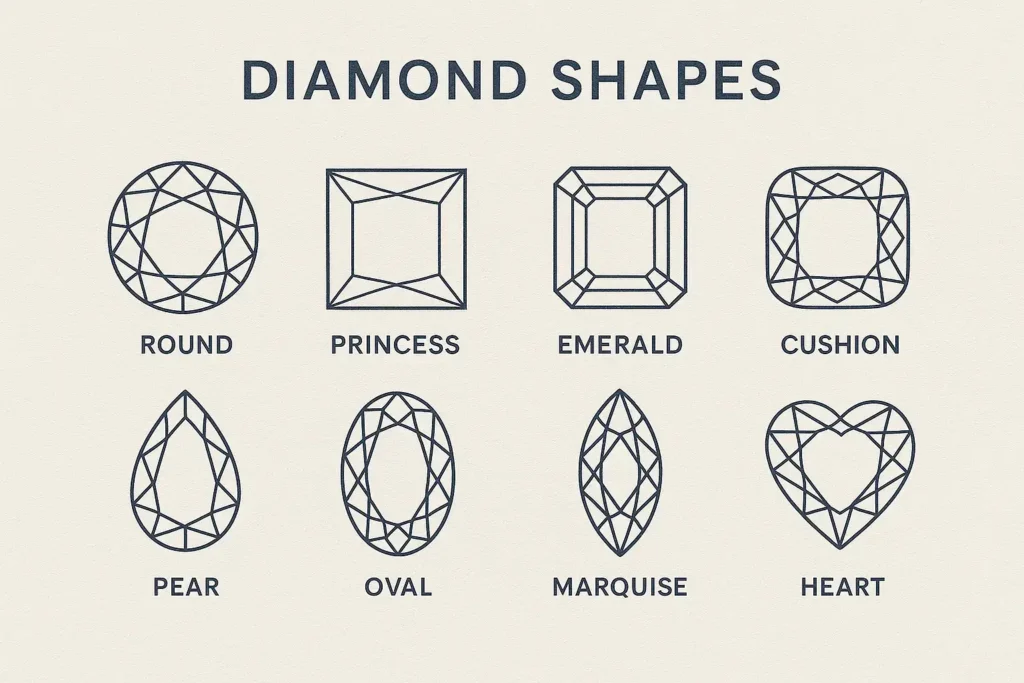
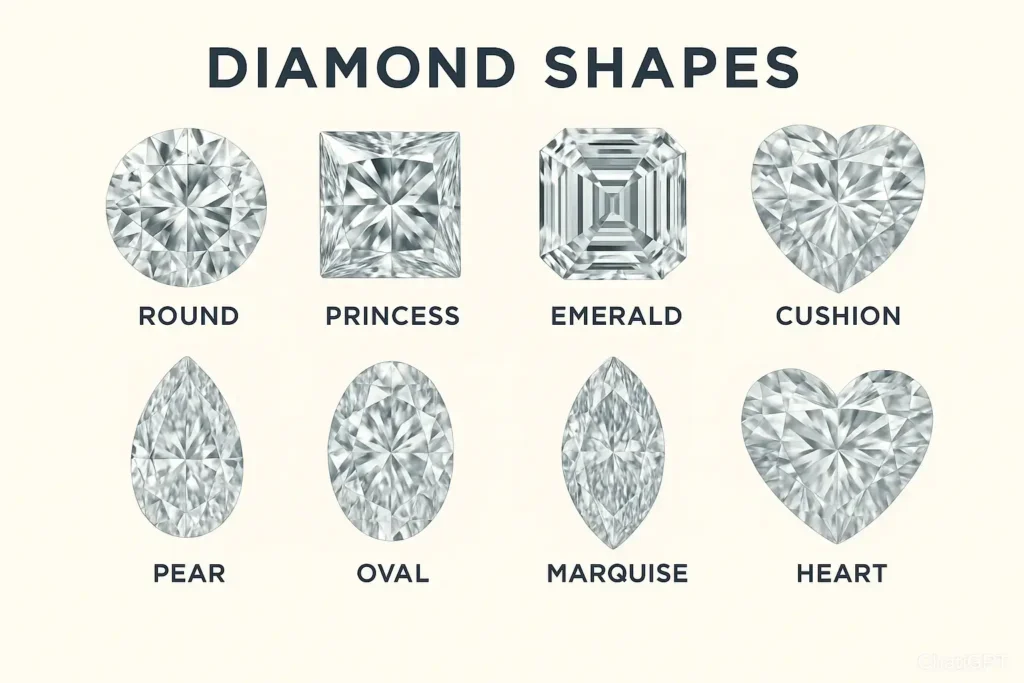
Popular diamond cuts every beginner should know:
- Round Brilliant – classic and most sparkling.
- Princess – square-shaped with sharp corners.
- Oval – elegant, elongates fingers.
- Cushion – soft, pillow-like shape.
- Emerald – rectangular with step cuts, very sophisticated.
🔹 Natural vs Lab-Grown
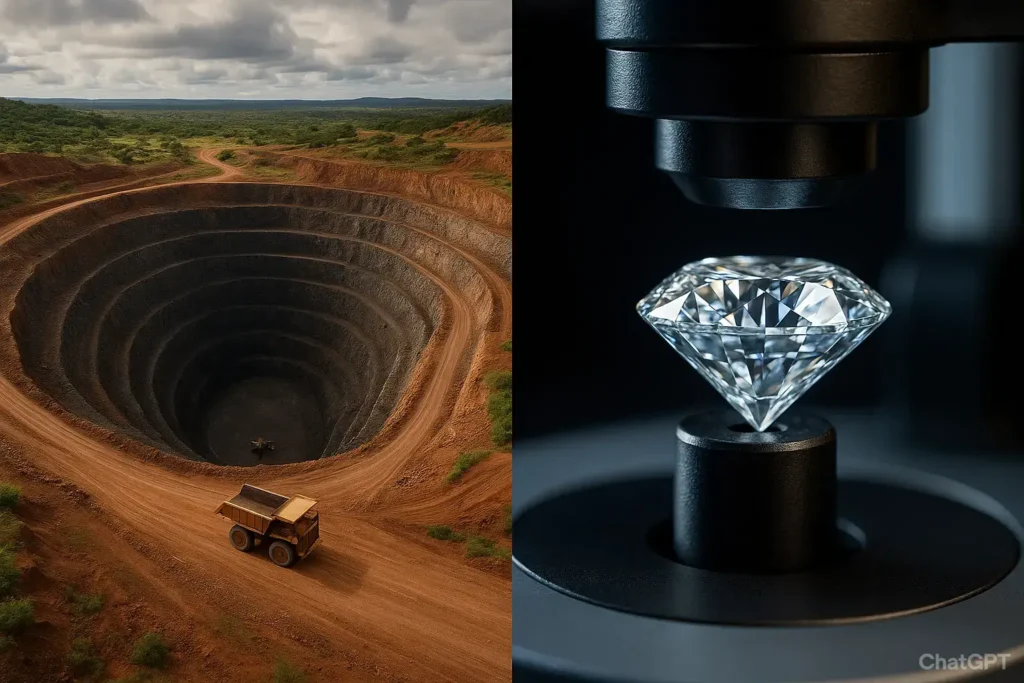
- Natural Diamonds: Formed over billions of years underground. Rarer, often more expensive.
- Lab-Grown Diamonds: Created in labs using advanced technology. Affordable and eco-friendly.
🔹 Buying Tips for Beginners
- Always check certification (GIA, AGS, IGI).
- Prioritize Cut over Carat for maximum sparkle.
- Set a budget before shopping.
- Compare prices online before visiting a jeweler.
- Ask about warranties & return policies.
🔹 Diamond Care & Maintenance
- Clean with warm water and mild soap.
- Avoid harsh chemicals and ultrasonic cleaners for fragile settings.
- Store separately in a soft pouch to prevent scratches.
- Get professional cleaning once a year.